This website explains the appeal of soba, Japan’s national dish.
Soba is a very important dish for Japanese people. The reason is that Soba is originally a dish for entertaining important guests.
Soba, which was prepared with a lot of care and attention, was the best way to welcome guests.
Therefore, eating Soba has a special meaning for Japanese people.
In Japan, there is a custom of eating “Toshikoshi Soba(年越し蕎麦)” at the end of the year to wish happiness to oneself and others.
Soba has always been a food that has been close to people and has brought happiness to people.
We hope you will discover the profound charm of Japanese buckwheat noodles.
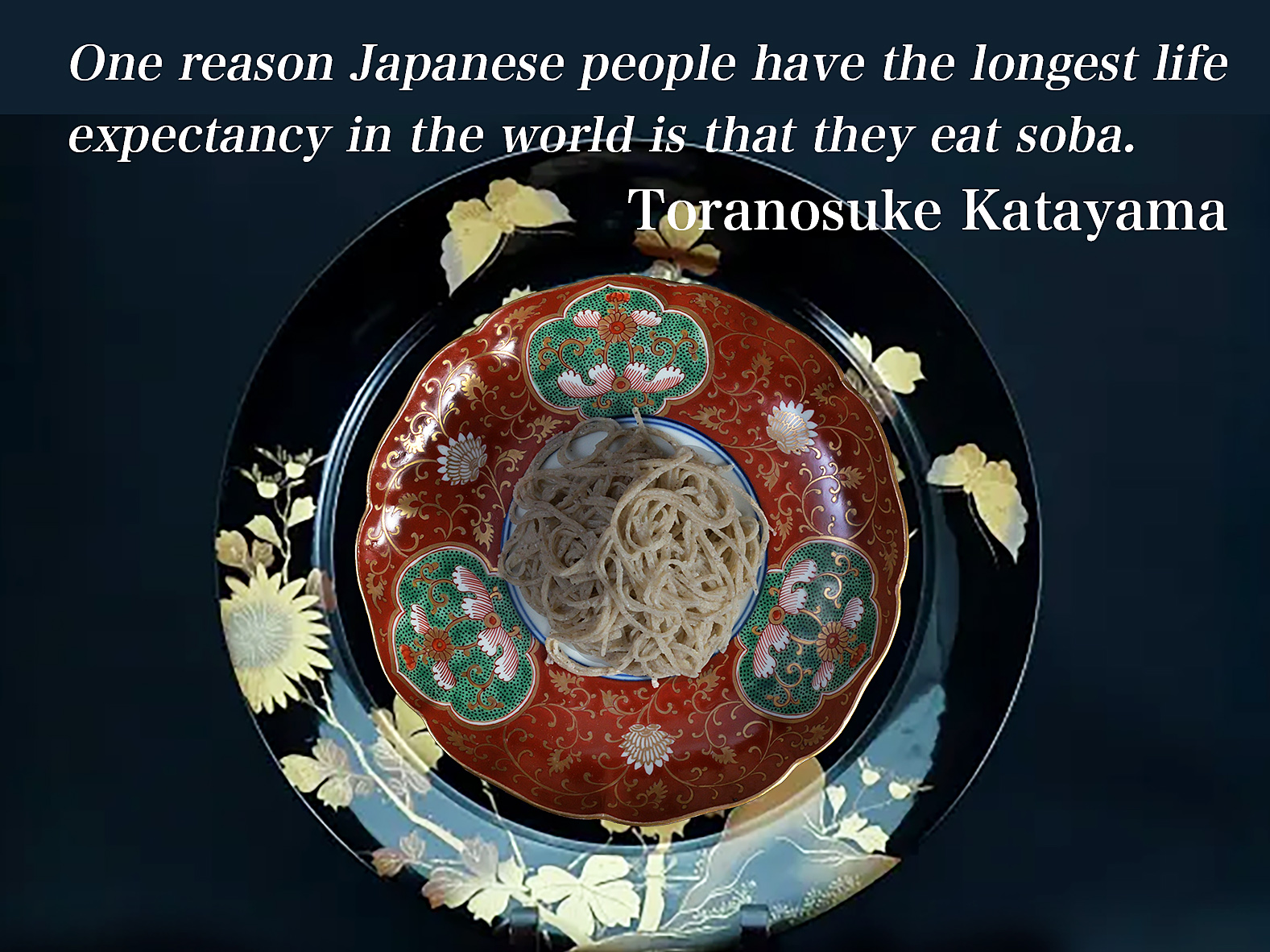
Live Longer with Soba
The global average life expectancy is 68.9 years for men and 74.0 years for women, with a combined average of 71.4 years.
In contrast, the average life expectancy in Japan is 84.46 years (according to WHO data for 2025), and the country continues to hold the top spot as the nation with the longest life expectancy in the world. In fact, Japanese people live 13 years longer than the global average.
One reason for the remarkable longevity of the Japanese people is soba.
The Japanese have an astonishing fondness for soba; it is incorporated into various annual events, and they have developed the habit of eating soba whenever a special occasion arises.
As has already been scientifically proven, the nutrients found in soba—particularly rutin—help prevent lifestyle-related diseases such as hypertension, diabetes, and stroke, and have the power to maintain health even as one ages. Furthermore, buckwheat contains trace elements such as minerals that are difficult to obtain through a typical diet, as well as essential amino acids—which are absolutely necessary for sustaining life but cannot be produced by the human body—that can be obtained by eating buckwheat.
Even in an era before the development of modern science, the Japanese knew from experience the health benefits of buckwheat and have continued to eat this life-sustaining food on a daily basis.
I, Toranosuke Katayama, am currently 76 years old—seven years older than the global average life expectancy for men, which is 68.9 years. Despite this, I am in perfect health and continue my daily work as the sole expert dedicated to passing down the traditional techniques and knowledge of soba.・・・・・read more➡︎
⬇︎Link to “Basic Knowledge of Soba” page。You can learn the basics about soba, including topics such as: “What is Soba?”, “What is Juuwari Soba?”, “What is Nihachi Soba?”, “What is Sobauchi?”, “How to eat Soba,” and “How to use Yakumi (condiments).”
・・・・・・・・・・・・・・・・・・・・・・・・・・・
[About the authors of this site]
Toranosuke Katayama(片山虎之介)
Soba Researcher, Chairman of the Japan Soba Preservation Society(日本蕎麦保存会)
For over 30 years, I have been researching the culinary culture of Japanese soba (buckwheat noodles).
In the course of this work, I became aware that the traditions surrounding soba were vanishing at an alarming rate, which prompted me to begin efforts to preserve this traditional food culture. In 2007, I established the Japan Soba Preservation Society(日本蕎麦保存会). Since then, I have conducted extensive research into every aspect of soba—from its cultivation, milling, and noodle-making processes to its history.
Currently, I share information with a global audience, primarily through our official website, “Japan Soba Preservation Society JP.”
He has placed a particular emphasis on promoting traditional soba-making techniques; to date, more than 6,000 people have mastered the craft under his tutelage.
Many people from abroad participate in his soba-making workshops—at times, international participants even outnumber those from Japan.
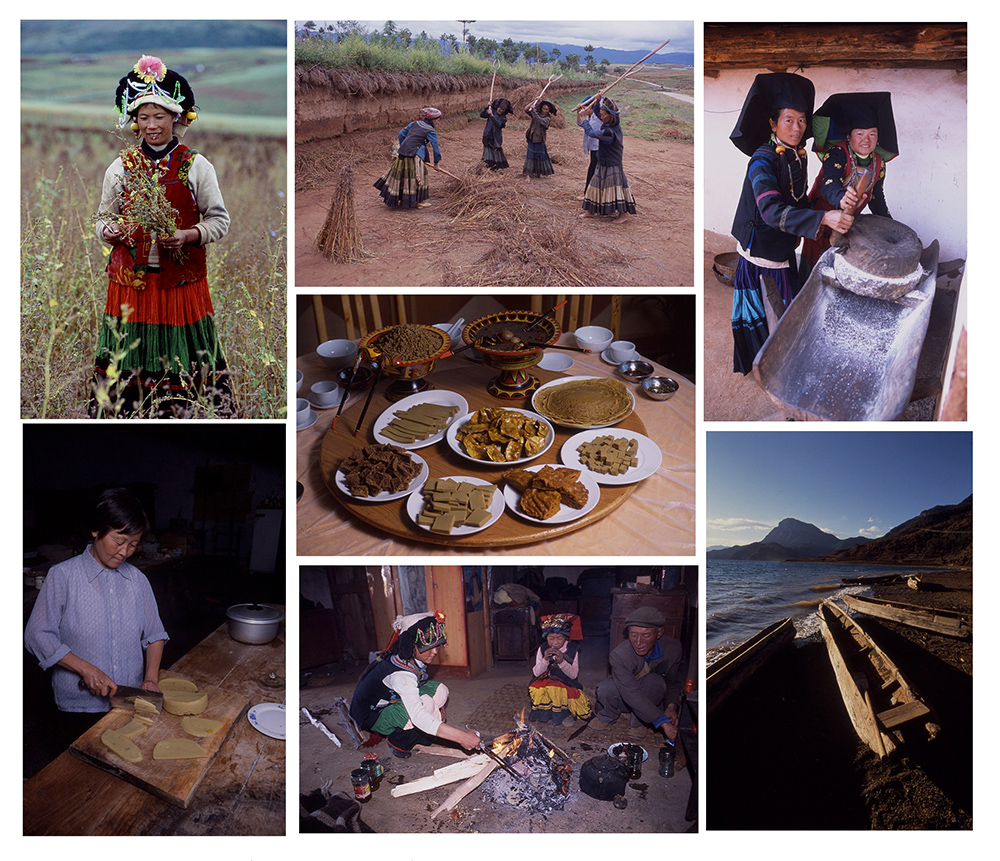
He also possesses deep knowledge regarding the health benefits of consuming soba. In 2000, he undertook an expedition into remote, restricted regions of China—areas then largely inaccessible to foreigners—to conduct research. He subsequently authored two books on Tartary buckwheat (dattan soba), which contains over 100 times more rutin than conventional buckwheat. These publications introduced the Japanese public to Tartary buckwheat and sparked a boom for the grain that extended beyond Japan to China and the rest of the world. He is widely recognized for introducing this health-promoting variety of buckwheat to a global audience.
Special workshops centered on the deliciousness and health benefits of soba (buckwheat noodles) are currently being held in Tokyo and Kyoto, drawing numerous high-profile guests and VIPs from around the world.
The organizer is also frequently featured in various media, including publishing and television.
In 2026, the “Echizen Soba Biennale”—the world’s first art festival dedicated to the aesthetic appeal of soba—was launched.
Today, this individual is recognized as a leading authority in Japan on the traditions and culinary culture of soba.
[Official Website]
https://toranoske.com
Toranosuke Katayama’s(片山虎之介) Soba Making Class
If you wish, Toranosuke Katayama(片山虎之介) can teach you directly.
If you want to improve your soba noodle making skills, please sign up.

Official website introducing Toranosuke Katayama(片山虎之介)’s activities

Soba making classes, Tokyo. Ginza, Toranomon, Minami Aoyama,

How to cook buckwheat dry noodles in a microwave oven, You Tube

English-language newspaper in which Toranosuke Katayama was introduced

All photos and text on this site are copyrighted by Toranosuke Katayama(片山虎之介). Unauthorized use is prohibited.