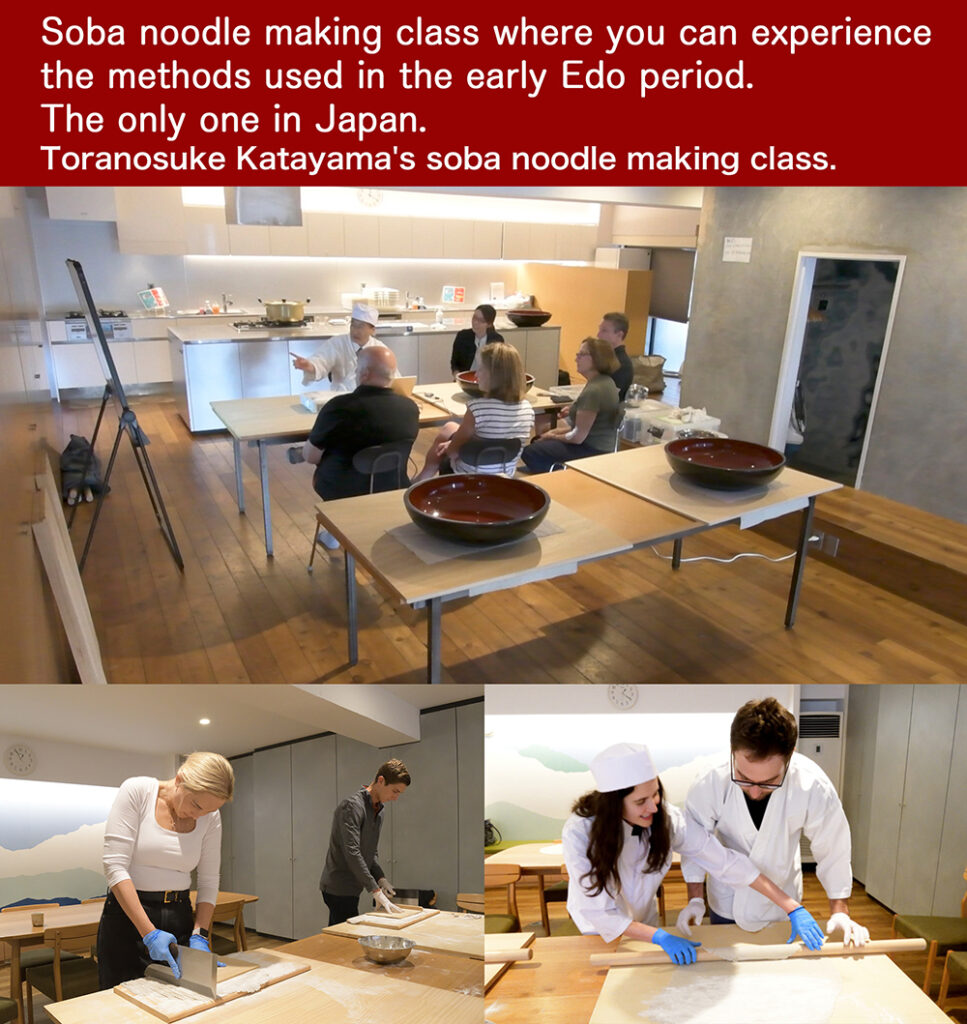
“The Elixir of Eternal Youth Bestowed by the Gods”: A private hands-on workshop where you can make and savor “Perfect Japanese Soba” yourself. Held in Kyoto.

Live Longer with Soba
The global average life expectancy is 68.9 years for men and 74.0 years for women, with a combined average of 71.4 years.
In contrast, the average life expectancy in Japan is 84.46 years (according to WHO data for 2025), and the country continues to hold the top spot as the nation with the longest life expectancy in the world. In fact, Japanese people live 13 years longer than the global average.
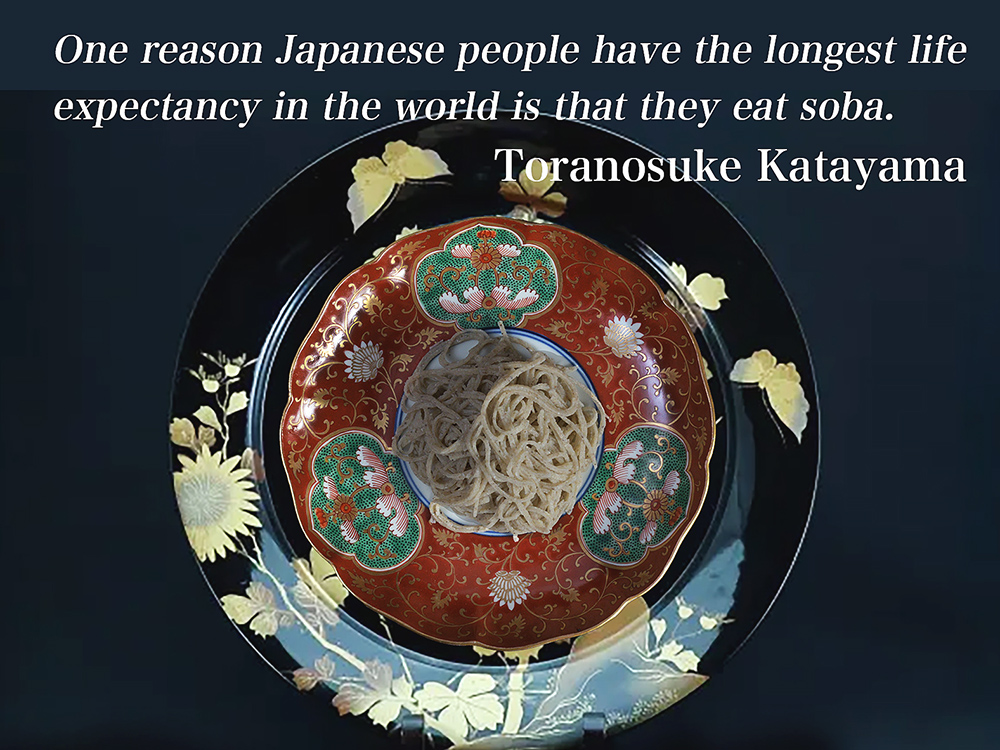
One reason for the remarkable longevity of the Japanese people is soba.
The Japanese have an astonishing fondness for soba; it is incorporated into various annual events, and they have developed the habit of eating soba whenever a special occasion arises.
As has already been scientifically proven, the nutrients found in soba—particularly rutin—help prevent lifestyle-related diseases such as hypertension, diabetes, and stroke, and have the power to maintain health even as one ages. Furthermore, buckwheat contains trace elements such as minerals that are difficult to obtain through a typical diet, as well as essential amino acids—which are absolutely necessary for sustaining life but cannot be produced by the human body—that can be obtained by eating buckwheat.
Even in an era before the development of modern science, the Japanese knew from experience the health benefits of buckwheat and have continued to eat this life-sustaining food on a daily basis.
I, Toranosuke Katayama, am currently 76 years old—seven years older than the global average life expectancy for men, which is 68.9 years. Despite this, I am in perfect health and continue my daily work as the sole expert dedicated to passing down the traditional techniques and knowledge of soba.
Considering the global average life expectancy, at my age I should have been in my grave six years ago, yet I am still going strong.
I personally believe this is, without a doubt, thanks to eating soba.
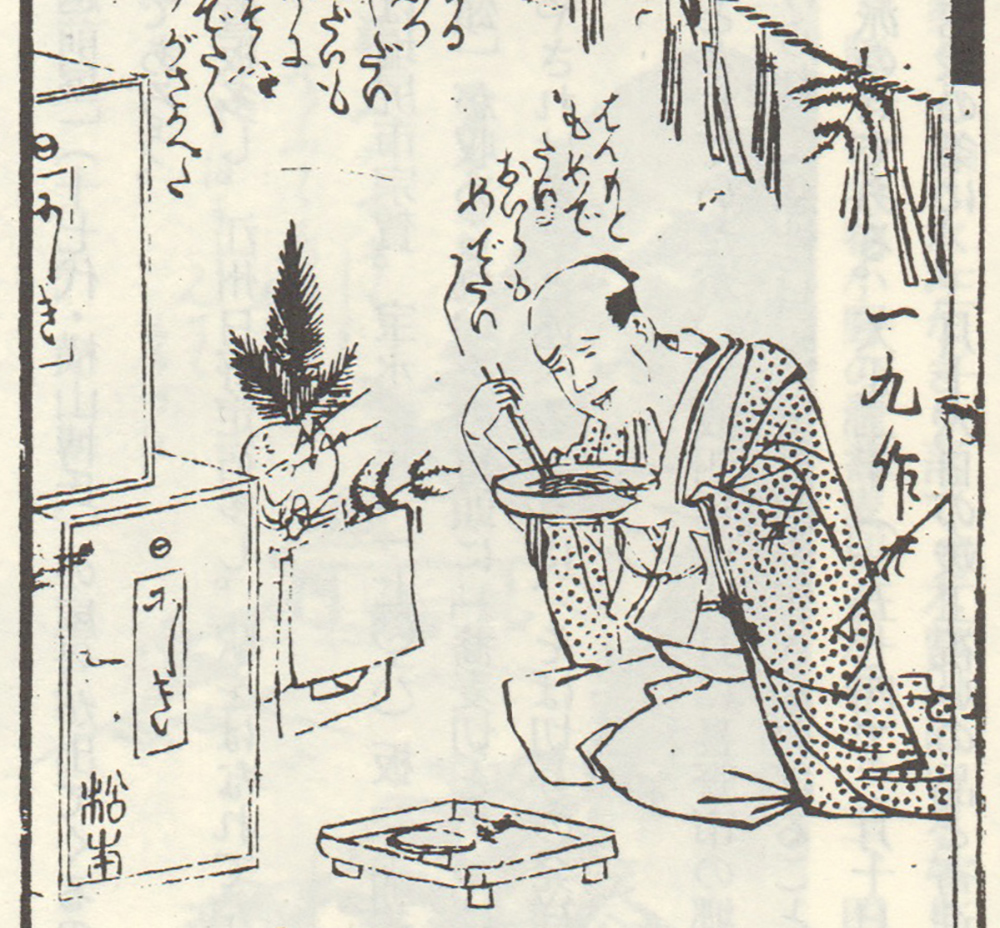
⬇︎This scene, depicted in an Edo-period painting, shows Jippensha Ikku—a renowned playwright (and novelist) of the late Edo period—eating soba on New Year’s Eve. Eating “Toshikoshi Soba” on New Year’s Eve is a national tradition in Japan, and as the year comes to a close, people gather to eat soba together. It is a symbolic tradition that reflects the Japanese people’s fondness for soba.
Soba has another major appeal besides its health benefits
Although buckwheat possesses such remarkable health benefits, it actually has another quality that is just as appealing as those health benefits.
That quality is its deliciousness.
Authentic Japanese soba, as eaten during the Edo period, was incomparably more delicious than modern soba.
It was so delicious, in fact, that it could not be incorporated into the “kaiseki” multi-course meal served during Kyoto’s tea ceremonies in its original form. If soba with the same flavor as in the Edo period were included in the course, it would overshadow the main dishes—such as pike conger or sweet sea bream—so the soba was refined until it turned white, and its flavor and aroma were toned down to allow it to be incorporated into the meal. It is typically served at the very end of the course as a small, final taste, but the soba offered here no longer possesses the original flavor of soba; it has become merely a “soba-like” dish in name only.
Consequently, in the streets of Edo, “soba-ya”—restaurants that served only soba, separate from multi-course meals—became all the rage. It was precisely because of these specialty “soba-ya” that authentic “Japanese soba,” with its rich flavor and aroma, became one of the most popular dishes of the Edo period.
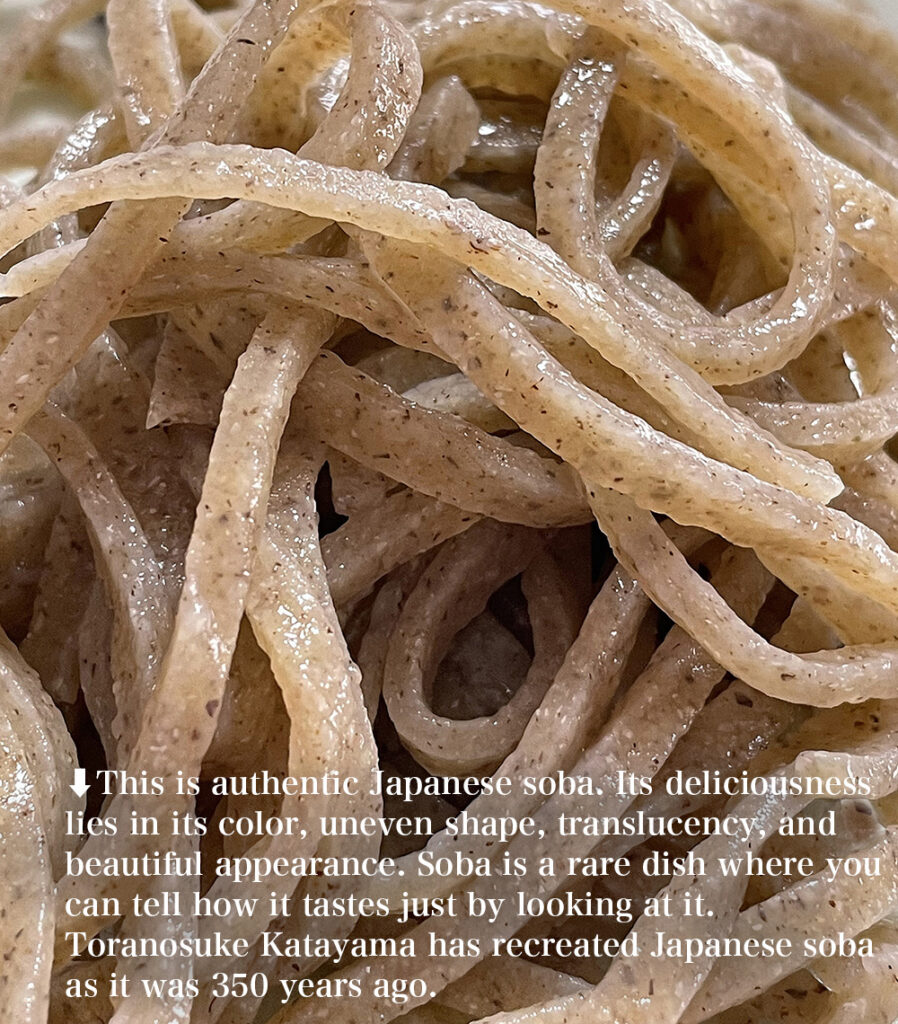
⬇︎This is authentic Japanese soba. Its deliciousness lies in its color, uneven shape, translucency, and beautiful appearance. Soba is a rare dish where you can tell how it tastes just by looking at it. Toranosuke Katayama has recreated Japanese soba as it was 350 years ago.
The culinary culture of Japanese soba is now in danger of disappearing.
As civilization advances, a mindset that prioritizes efficiency becomes more widespread.
Japan is no exception; modern society prioritizes efficiency in everything and shuns anything that requires extra effort.
This is very unfortunate for soba. Soba is a dish whose flavor deteriorates drastically if shortcuts are taken during preparation.
Since it is originally made with nothing but buckwheat flour and water, it requires extremely delicate preparation.
Yet, to enable mass production, modern buckwheat has undergone repeated selective breeding. With each round of selective breeding, buckwheat becomes increasingly unpalatable. Furthermore, the “summer buckwheat” variety—which was once derided in the Edo period with the saying, “Even a dog won’t eat summer buckwheat”—is now cultivated on a large scale in Hokkaido and distributed throughout Japan.
Due to shortcuts in preparation, traditional food culture has been lost, and through selective breeding, the natural flavor of the ingredients has been destroyed. This is the true nature of the “soba-like” product currently circulating in modern Japan.
I, Toranosuke Katayama, deeply concerned about this situation, founded the Japan Soba Preservation Society on June 5, 2007. Since then, with the help of many colleagues, I have continued my efforts to protect the culinary culture of Japanese soba.
It is people who carry on traditions. When a person passes away, the tradition disappears as well. I have witnessed this firsthand many times.
Starting around 1998, I began visiting soba restaurants across the country to listen to and document the stories of the elders who had devoted their entire lives to soba.
These elders took me by the hand and passed down their soba-making techniques—as well as the meticulous yet crucial know-how—just as they would teach their own sons.
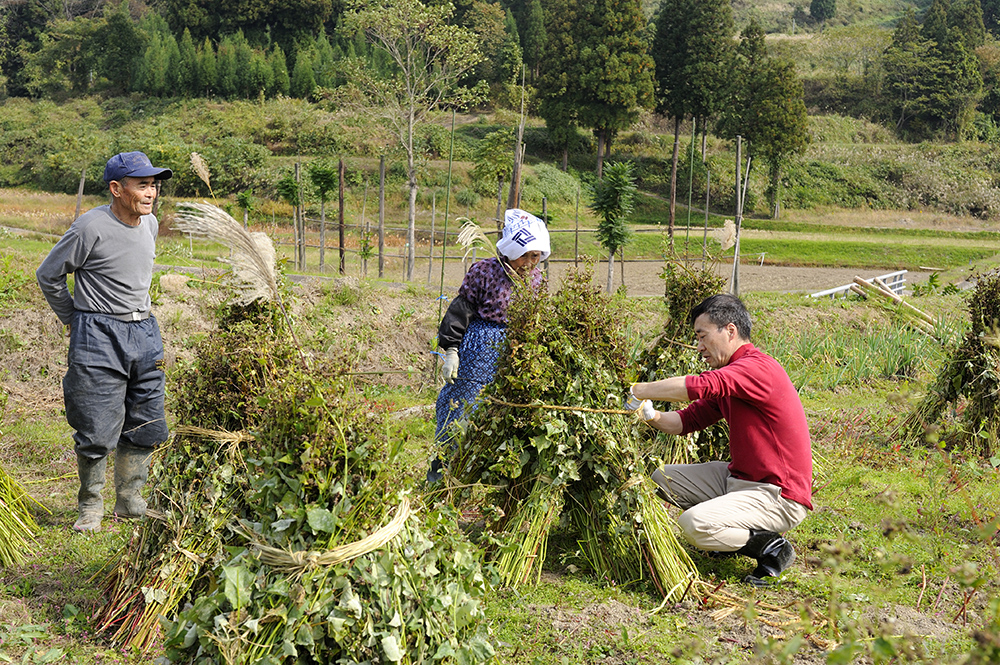
⬇︎In October 2009, Toranosuke Katayama learns traditional buckwheat farming methods from a buckwheat farmer.
I have been carrying on this work for 30 years now, but many of the people who knew what the culture of soba was truly like have since passed away.
And within my body, the culture that dozens of elders have preserved has been condensed and passed down to me.
Regrettably, I have now become the sole custodian of these classical techniques and wisdom.
I believe my mission now is to pass on the classical techniques of Japanese soba—which this body has inherited—to the younger generation.
To that end, I run soba-making classes in Tokyo, organize the “Echizen Soba Biennale,” an arts festival centered on soba, and hold special workshops for people overseas who are interested in soba to share this knowledge internationally.
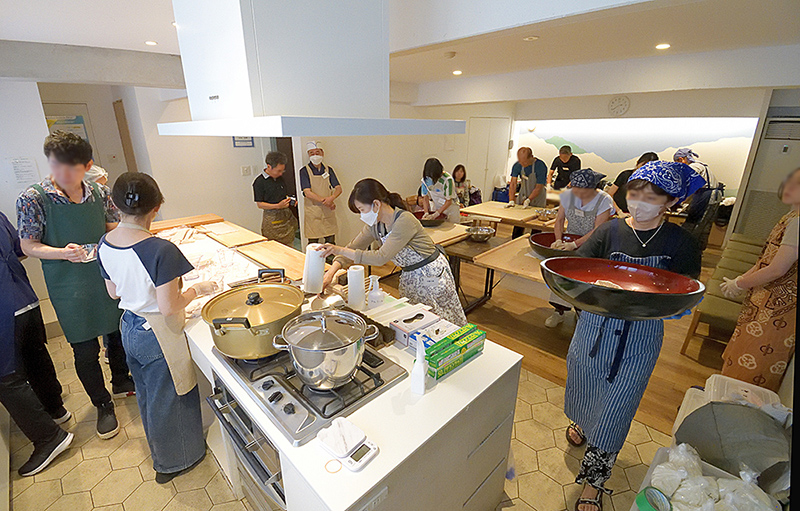
⬇︎We are working to pass on the culinary culture of Japanese soba—which has since been lost—to the younger generation.
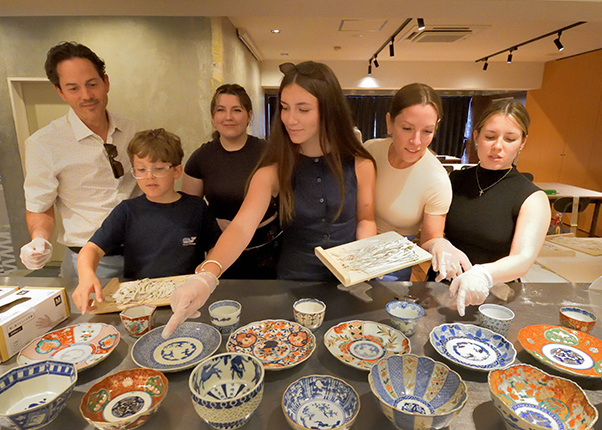
⬇︎We have many participants joining us from overseas as well. You’ll be able to choose and use your favorite pieces from our collection of antique Imari porcelain.
For the past 600 years, there have been rules governing how to eat soba.
Toranosuke Katayama thoroughly researched records on how to enjoy soba, sake, and cuisine—beginning with the “Yamashinake Raiki,” an ancient document from the Muromachi period written approximately 600 years ago, and continuing through records written up until the end of the Edo period.
Based on these historical records—totaling 207 entries—he has revived a multi-course meal designed to allow people to enjoy soba deliciously without compromising its health benefits. The main dishes consist of six different types of soba. The name of this multi-course meal is “Sen-nichi-zen.”
There are rules for eating soba. Because soba has such potent effects, continuing to eat it incorrectly can actually shorten your lifespan. I know several people who have passed away in their 50s due to this very reason. If you hope to reap the health benefits of soba, you must strictly follow the rules. The “Sen-nichi-zen” is packed with 600 years’ worth of wisdom from our ancestors, advising us on “the ideal way to eat soba.”
Furthermore, the culinary culture surrounding soba is deeply intertwined with values unique to Japan—such as “Zen,” “iki,” “wabi,” and “sabi”—which embody Japanese aesthetics. By savoring the “Sen-nichi-zen” and learning about soba, you should be able to understand these aesthetics and values as well.
The culinary culture of soba also encompasses the ingenuity behind the tools used in food preparation—such as crafts related to dining, cutlery, and stone mills. Naturally, creating the “Sen-nichi-zen” requires the assistance of these traditional techniques.
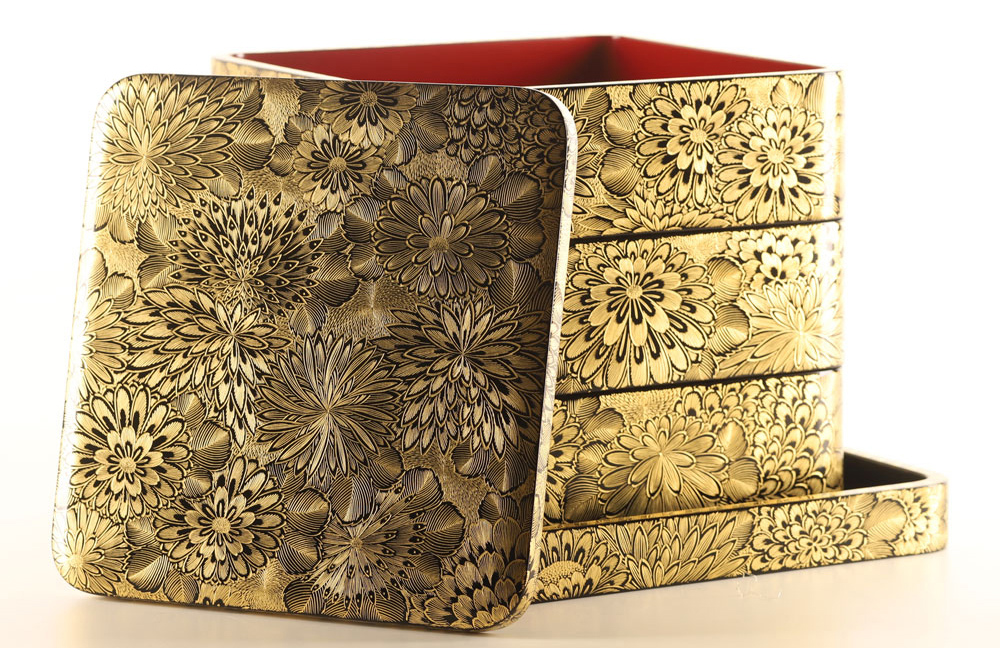
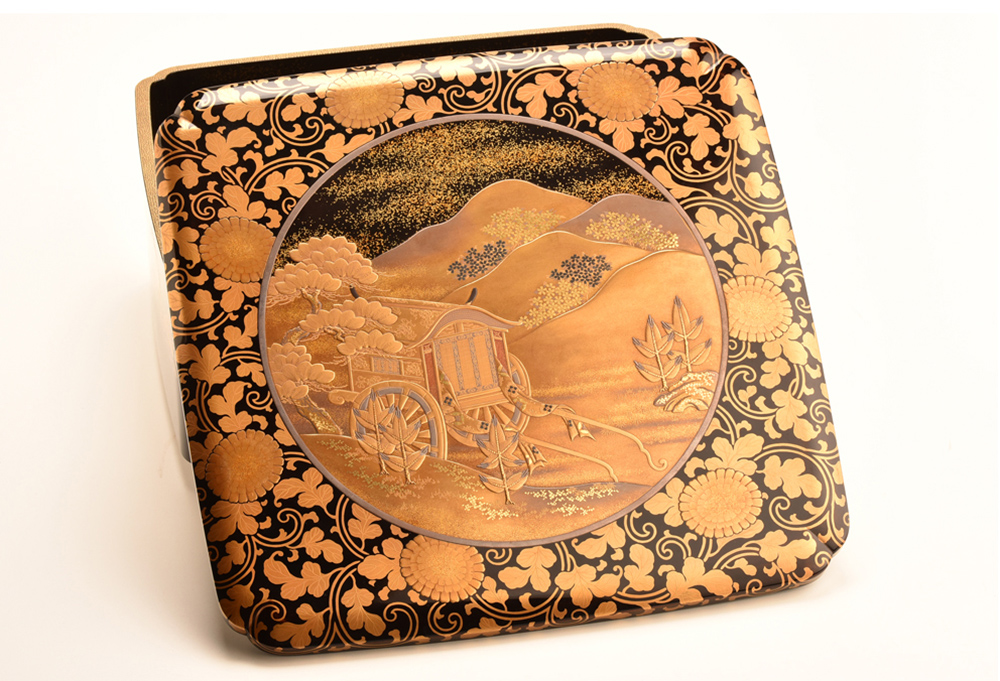
The soba is served on antique “Ko-Imari” porcelain—which once captivated Europeans—and lacquerware adorned with “maki-e” (gold-leaf inlay), which Marie Antoinette is said to have loved more than jewels.
The traditional Japanese aesthetic lives on in these details as well.
⬇︎ These are rare pieces of tableware crafted by a Living National Treasure using traditional techniques, which are used in the “Sen-nichi-zen” meal. Throughout the dining experience, you’ll have the opportunity to appreciate various aspects of Japanese beauty through these pieces.
“Soba That Saves Lives,” Incorporated into Zen Buddhist Ceremonies
The “Sen-nichi-zen” meal, which I eat almost every day, is named after the “Sen-nichi Kaihō-gyō” ascetic practice performed at Enryaku-ji Temple on Mount Hiei, a Zen Buddhist temple in Kyoto.
The “Sen-nichi Kaihō-gyō” is an ascetic practice in which practitioners spend a long period—one thousand days—circling Mount Hiei and Mount Yoshino.
Once begun, this practice cannot be abandoned midway; it is a life-or-death endeavor in which practitioners carry a short sword and a “shide-himo” (a rope for suicide) in case they become unable to continue, so they can take their own lives if necessary.
The “Sen-nichi Kaihō-gyō” is not performed continuously for 1,000 days; instead, periods of rest are interspersed throughout.
While undertaking the practice, practitioners walk about 30 km of mountain trails each day. In the fifth year, after completing 700 days, they undergo the “Dō-iri” ritual, during which they spend nine days continuously chanting the sutras of Fudō Myōō while abstaining from food, water, sleep, and lying down. Practitioners who successfully complete the “Dō-iri” are revered as “Living Buddhas” (Great Ajari).
These nine days represent the greatest challenge. Although practitioners fast during this period, they are not required to abstain from all food; they are permitted to eat only soba.
It is the power of soba that keeps the practitioners alive by the skin of their teeth for those nine days. If the only permitted food were grains other than buckwheat—such as rice or wheat—it would be difficult to survive this ascetic practice. It is precisely because it is buckwheat that the practitioner’s life is sustained. That is the nature of buckwheat. In a sense, it is a food that can be described as a divine elixir, bestowed by the gods to protect life.
In this way, “soba” and “Zen” are bound by an inseparable, profound connection. The “Sen-nichi-zen” that Katayama is eating is a soba course meal grounded in Zen teachings and incorporating 600 years of history. Furthermore, the “Sen-nichi-zen” course includes soba prepared using the exact same method as the “divine medicine” consumed by ascetics at Enryaku-ji Temple on Mount Hiei during their nine-day “Dō-iri” retreat.
⬇︎In Toranosuke Katayama’s special workshop—where you can experience the health benefits of Japanese soba and the historical aesthetics of Japan—you’ll enjoy soba served in antique bowls like these.
Click the icon below to go to the registration page. Many health-conscious participants from overseas have joined us.
● The “Sen-nichi-zen” special workshop featured on this page is held exclusively in Kyoto. When registering, please be sure to specify that you would like to attend “Toranosuke Katayama’s workshop in Kyoto.”

⬇︎ “Sen-nichi-zen” Juwari Soba (100% buckwheat soba)
⬇︎ Click here to go to the registration site. The “Sen-nichi-zen” special workshop featured on this page is held exclusively in Kyoto. When registering, please be sure to specify that you would like to attend “Toranosuke Katayama’s workshop in Kyoto.”