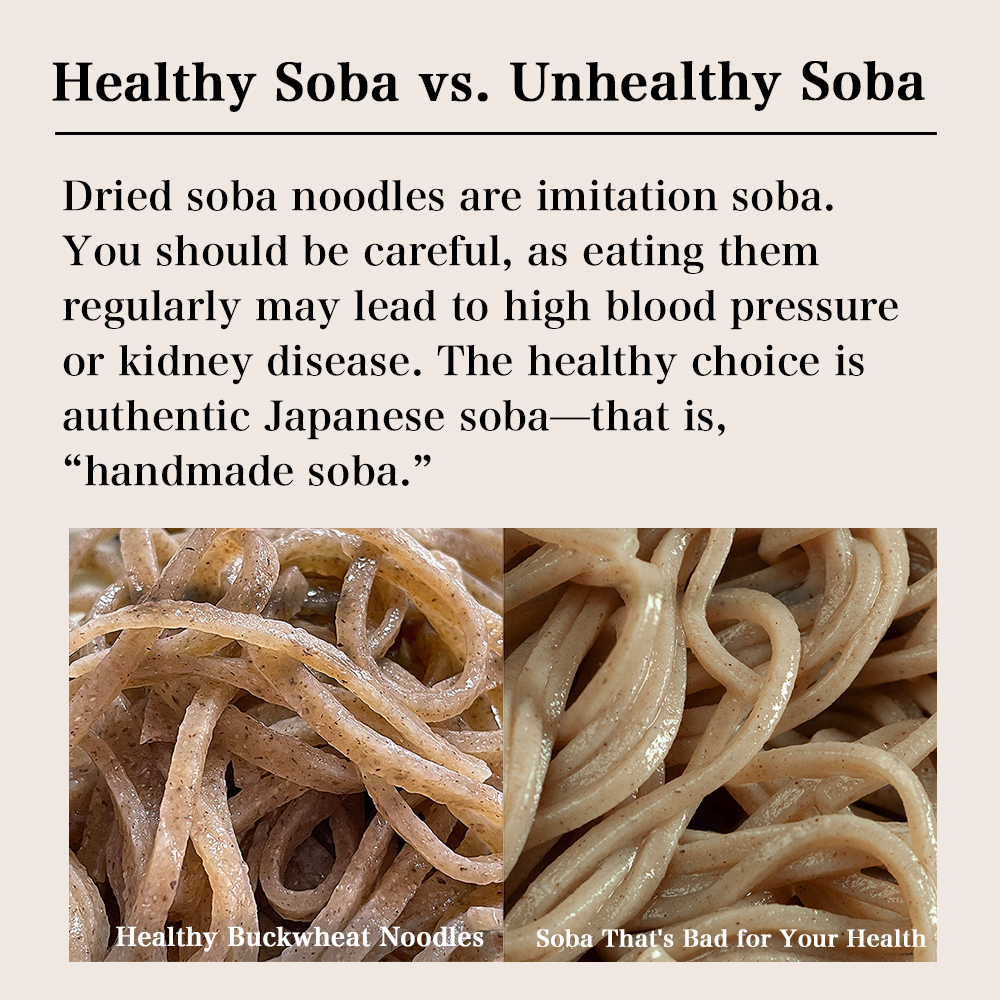
Japanese soba is a healthy food. It possesses a nutritional balance approaching that of a “complete food” and contains essential amino acids—substances that the body cannot produce on its own yet are absolutely vital for sustaining life.
Furthermore, it provides trace minerals that are often difficult to obtain from other food sources. Soba is such an exceptional food that it could well be described as a “life-sustaining medicine bestowed by the gods” to safeguard human health.
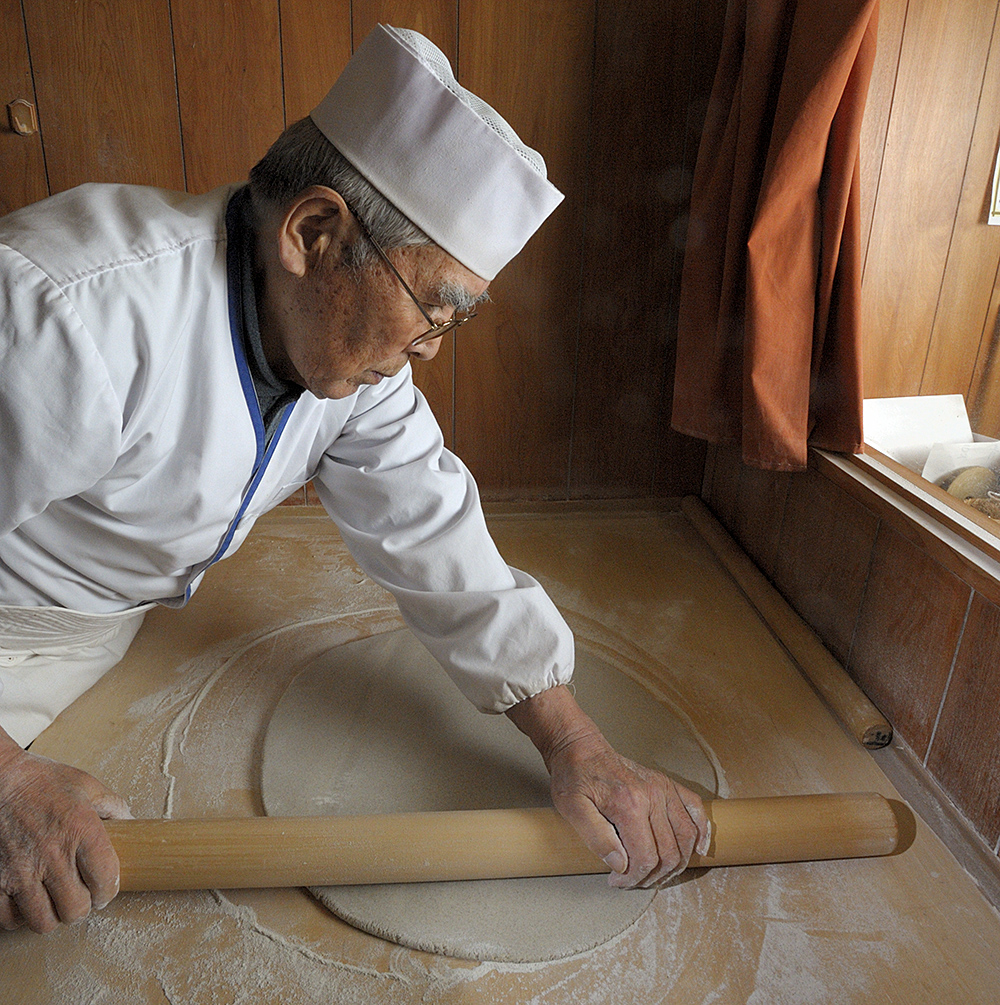
⬇︎This is how authentic Japanese soba is made. The taste, aroma, and texture are completely different from those of dried soba noodles. Since no salt is used at all, you can eat it every day. This soba is good for your health.
However, there is one thing you should be aware of.
Consuming “dried soba noodles”—under the impression that they are good for your health—could actually end up being harmful. These dried noodles are not authentic Japanese soba; they are an imitation product, invented during the Meiji era to resemble the real thing. Because they are mass-produced industrially, their flavor is significantly inferior to that of authentic soba. Consequently, people tend to eat them by drenching them in a large amount of dipping sauce—and that is the problem.
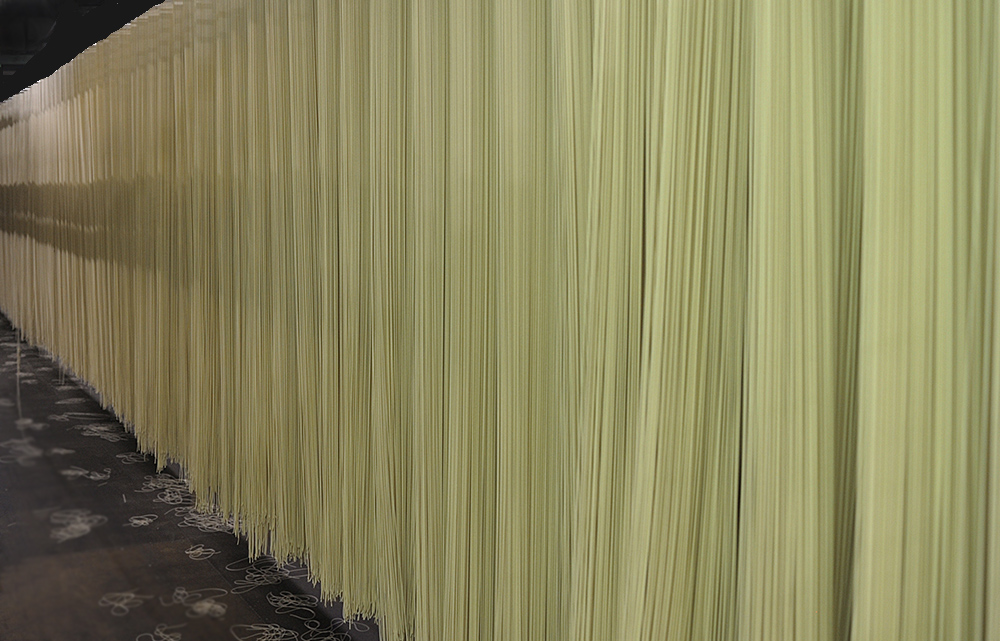
⬇︎Dried soba noodles are mass-produced in factories like this. As you can see in the photo, when the noodles are hung up to dry, they break under their own weight and fall to the floor. Salt is added to the noodles to minimize this as much as possible. Although they look similar to “Japanese soba,” they are actually a completely different food.
If you keep eating “fake” dried soba noodles—under the impression that soba is good for your health—you run the risk of developing high blood pressure or damaging your kidneys due to excessive salt intake.
This is not an issue if you eat authentic Japanese soba. Genuine soba is so delicious that you can easily finish an entire serving without even needing any dipping sauce. Since you only use a small amount of sauce, you avoid consuming an excessive amount of salt.
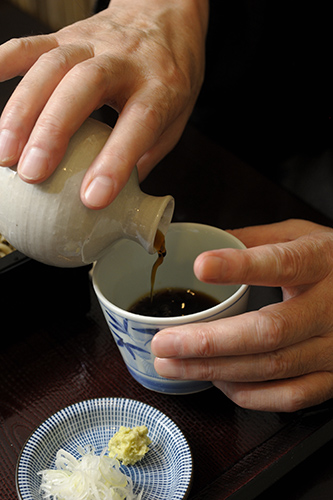
There is a piece of traditional wisdom among soba enthusiasts that dates back to the Edo period: “The stylish way to eat soba is to dip only the tip of the noodles into the sauce.” This advice actually serves as a warning against excessive salt intake—a piece of lore known to every soba lover in Japan.
Authentic Japanese soba is so delicious that it can be enjoyed even without any dipping sauce; however, the same cannot be said for “dried soba noodles.” Because they are mass-produced in factories, their flavor, aroma, and texture are entirely different from those of authentic soba—in short, they simply do not taste good. Consequently, one must rely on a generous amount of dipping sauce to provide the flavor.
Currently, many people living overseas mistakenly believe that “dried soba noodles” are authentic Japanese soba, so they buy them at supermarkets and eat them. However, if you continue to eat these dried noodles without realizing the truth, you run the risk of shortening your life.
If you’re going to eat soba, please choose authentic Japanese “handmade soba” rather than imitation “dried soba noodles.”
⬇︎You can learn how to make authentic Japanese soba at Toranosuke Katayama’s soba class. Many people who want to lead healthy lives are currently participating in this class. Toranosuke Katayama recreates Edo-period soba and makes it using traditional Edo-period techniques. There’s no other place besides Toranosuke Katayama’s class where you can experience this. That’s why so many people are signing up for his class.

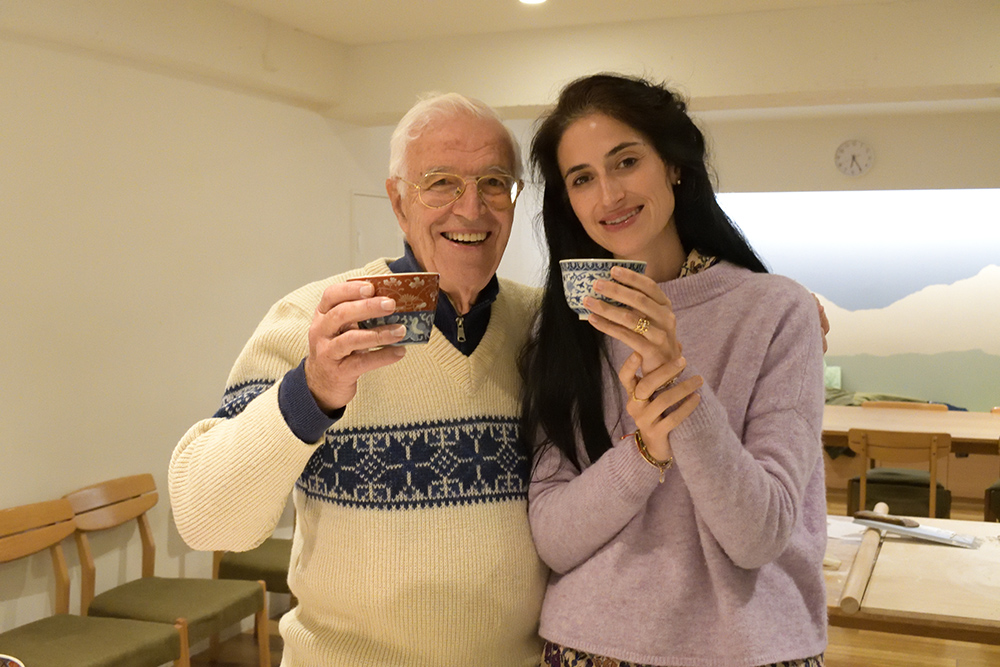
⬇︎A father and his daughter—both big fans of soba—came to visit us from Spain. They were thrilled to say that once they return to Spain, they plan to make their own soba and enjoy it. Right now, the number of people around the world who can make authentic Japanese soba is slowly growing.